MONDAYS AT NCA

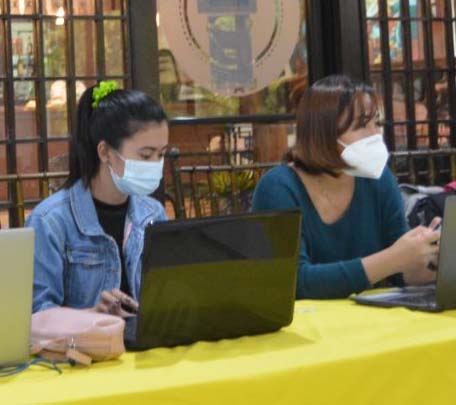
The New Christian Academy (NCA) conducts a regular flag ceremony every Monday via online video teleconferencing to adhere to the guidelines set by the Department of Education.

NCA finds ways to connect parents, teachers, students, and administrators without sacrificing our safety in these pandemic times and difficulties.

Hence, we sing the national anthem and ecumenical prayers through online presence. Students worldwide attend the same as part of the week-long online academic activities.

INTENSIFYING NCA ONLINE POWER

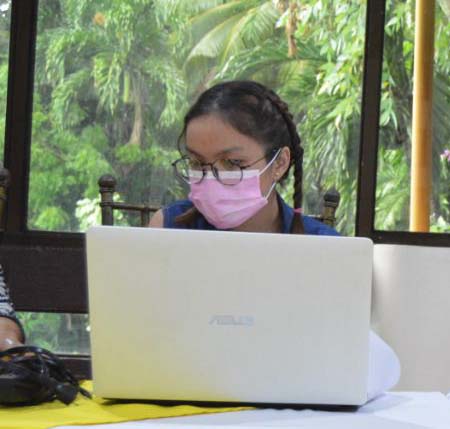
A few months after its School Year 2020-2021 opening on August 24, 2020, New Christian Academy (NCA) re-intensifies its online strength and capability in a rain-or-shine pre-scheduled workshop and conference in Lisland Rainforest Hotel and Resort in Urdaneta City, Pangasinan on the four-day holiday break of November 2020. As COVID-19 Pandemic heightens education challenges for every Filipino Family, NCA Administrative Officials, Founding Associates, and Academic Personnel convene in one of the City’s finest serenity-filled resorts to discuss and review the first quarter of its online curriculum offering. The topics for discussions that were resolved are:

  • Online curriculum content review, optimization, and development.
  • Online interaction protocols.
  • Online student performance evaluation and assessment.
  • Lesson preparations.
  • Development of instructional materials.

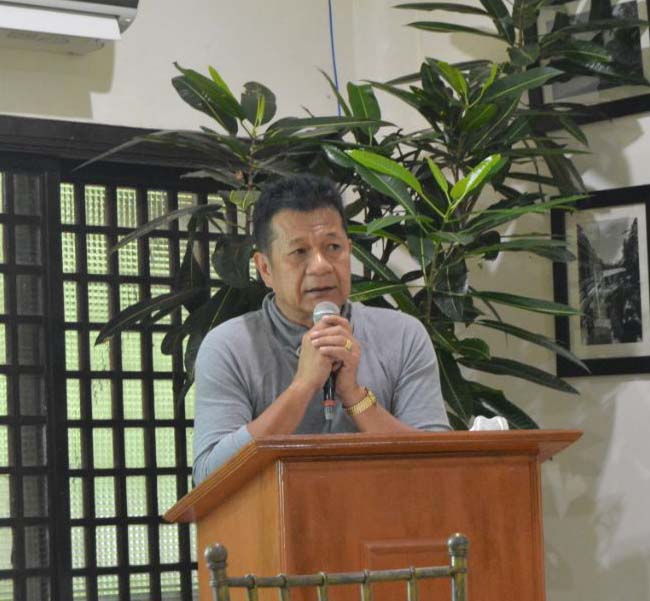
During the conference, Vice President Yoly Mallari emphasized the flexibility of interactions, requirements, and even assessment tests to maintain every family continuously motivated in facing this challenge under the new normal era. Founding Associate Dr. Seriel, discussed the conduct of continuous research for the development and simplification of self-learning instructional materials so that the utilization of the same will not be stressful with both parents and students. In conclusion, NCA should ensure that its clientele will get the fruitful online presence they deserve. [IATF-MGCQ Protocols were observed during the activity.]

NCA OPENS CLASSES ONLINE

The New Christian Academy (NCA) has “kicked off” the opening of classes on August 24, 2020, “rain or shine,” and online! Spearheaded and supervised by no other than its President, Mr. Ross P. Mallari, the opening of classes has started at 8:00 AM with an online “Flag Ceremony,” a Prayer, and discussion of online and video-conferences rules. Newly enrolled students from all over the world attend the beginning of classes.

To cope up with the Inter-Agency Task Force (IATF) health and safety protocols, NCA has adapted blended learning (modular, homeschooling, and online). “We want to ensure our teachers, staff, and students of the safest and healthiest way possible of learning; that is why we implement this mode of education delivery stating this School Year 2020-2021,” the school President added.

The president is in action and in on the Go!

MILESTONE OPERATION

The New Christian Academy (NCA) conducts its first pace of Parent Orientation via Powerful Google Meet for Education.

The Parents’ Orientation conducted on July 31, 2020 (Friday 1:00-5:00 PM – Philippine Time) is only one of the series of orientations scheduled by NCA to gradually orient NCA students and parents on what to expect for this School Year 2020-2021.

Grade Level advisers supervised the online orientation with Multiple Video Conference Sites and nodes. Our newly enrolled students based abroad, specifically in the Middle East, have actively participated in the first orientation. Teacher Bryan Flores, Principal of NCA Senior High School, spearheaded the Parents’ Orientation to the Middle East-based students.

NCA is committed to delivering quality Basic Education this coming school year, 2020-2021 onwards, to help every Filipino family worldwide. NCA envisions a frontier in providing online education in the heart of Central Luzon and across the globe.

NCA IS ONLINE READY

We have been silent for a few months since the start of the new school year because we are busy preparing our online infrastructure.

And now, we are proud to announce that New Christian Academy is now ready for the School Year 2020-2021. We have now completed the Online Distance Learning/Blended Learning requirements and all its variations standards mandated by the Department of Education (As Per DepEd Order No. 13 s2020).

Together with us for the entire school year and beyond will be our full-pledged cyber-teachers and IT staff and our IT Sister Organizations with over two decades of IT experience and expertise to provide quality, assured online education!

To help parents and families in these days of financial uncertainties, NCA will adapt quality and tested online educational materials that will be free and will not be for sale.

Adjustments and Safety Under New Normal

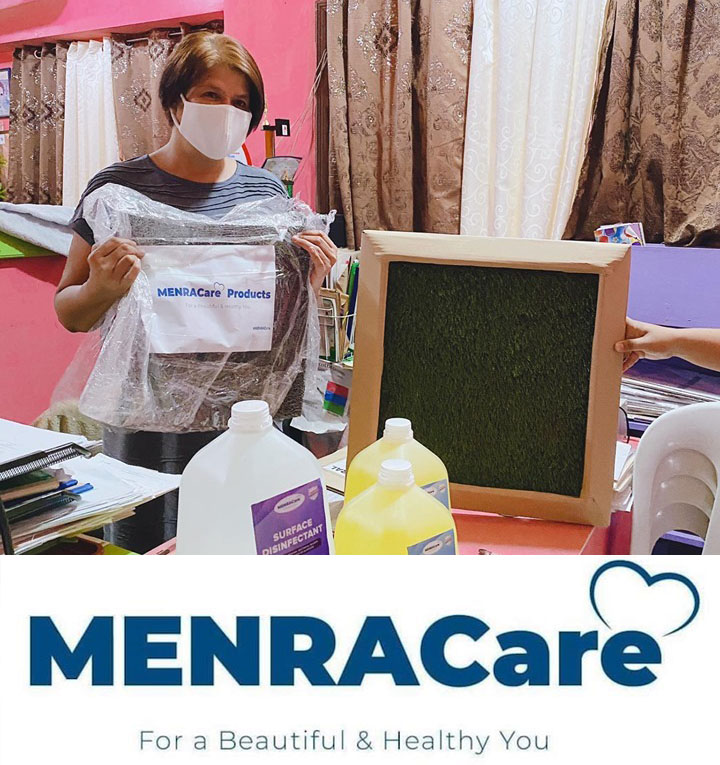
To ensure NCA meets the safety standards of the new normal lifestyle brought upon by this Covid-19 pandemic, NCA is teaming up with MENRACare Products. This Era of Blended Learning system gives our students and parents the service they deserve. Every doorway in and out of our school building is met with top-notch care thanks to MenraCare’s disinfectant sprays and disinfectant mats to ensure the safety of everyone within the school premises.

We will also be conducting classes online via Android, IOS, Windows, or Mac to ensure our students get their much-needed education safely at home.

OFFICIAL STATEMENT FROM THE DEPED

June 8, 2020 – We thank the President for reiterating the national government’s willingness to assist us in our endeavor to offer alternatives to face-to-face learning despite the public health situation.

We will comply with the President’s directive to postpone face-to-face classes until a vaccine is available.

We assure our parents, learners, stakeholders, and the President that we prepare ourselves for this mission.

Indeed, it is challenging for us at the Department of Education to prepare our schools in a different setup. Still, we are committed to our duty to make education available and thriving, even in the most difficult time.

From the Central Office down to the school level, the Department is fully engaged in readying our operations based on our Basic Education-Learning Continuity Plan (BE-LCP). We are updating our policies, realigning our finances, and collaborating with our partners so that our goals of providing quality education and protecting the safety and health of our constituents will be achieved.

Currently, we are continuing to conduct remote enrollment nationwide in order to assess learners’ household information, which will be crucial in the preparation and the contextualization of the learning delivery mode in each locality.

Meanwhile, the groundwork for blended learning is well underway. Radio, television, online and modular learning – which are pre-existing methods and were already used for decades – are being prepared and updated for this year. At the same time, teachers are being trained to utilize newer platforms and innovative tools to aid their professional development.

We are working with the private sector and education experts to make these necessary steps logistically sound, especially on the development, acquisition, and deployment of learning resources.

We will provide regular readiness assessment reports to the public as we have committed to Congress.

We will continue our preparations with a comprehensive BE-LCP and the President’s instruction serving as our guide. Finally, with our stakeholders coming together, we can leap towards achieving our ultimate goal – of making education a symbol of hope amidst doubts and uncertainties. [Adopted from Sec. Briones Statement, Department of Education]

NCA ONLINE AND HOME EDUCATION

Humanity has long recognized the rights of children to enjoy special protection and opportunities for physical, mental, spiritual, moral, and social development.

Nations and states are obliged to provide a situation where there is freedom and dignity to allow the full development of the youth. In the Philippines, an enabling law called the Child, and Youth Welfare Code (P. D. 603) ordains the government to make every effort to promote children’s welfare and enhance their opportunities for a valuable and happy life. This law also indicates that children’s best interest is a vital consideration in promulgating government policies.

It is undeniable that long before “school” had been invented by man, educating children has been done at home. There is no other place on earth where man’s progeny learned their first lesson as a human being. Indeed, home is where every human being was first educated. When schools came into being, they became the second home of children. If the school is the children’s second home, can’t the house be the lifelong school of children?

Cognizant of the preceding, there is a need to promote and widen children’s access to quality education. Aside from the traditional “in-school” education practice, the Education Department has to consider the “in-home” schooling practice formally. Home has a vital role in nurturing man’s progeny, and it should not just be a secondary or corollary to educating children. There is a need to reconsider and recognize the practice of homeschooling strongly. There are children out there who cannot avail of the formal instruction in a traditional school for some reason or other circumstances. Every individual has a unique learning style, and thus, the educational system must address this instinctive learning style efficiently and effectively. For these reasons, the education department must provide or allow an alternative delivery system of education to these children. An alternative answer to providing education for children is the Homeschooling Program.

HOMESCHOOLING CONCEPT

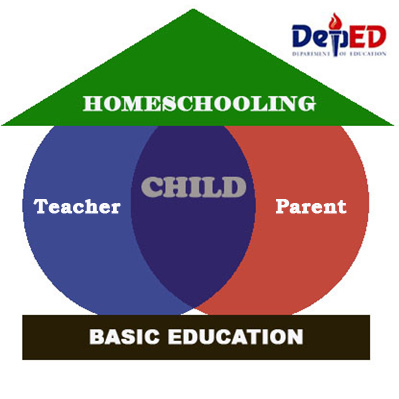
Homeschooling is the umbrella term for the alternative practice of formally educating children and youth at home. It is an alternative because of two prevalent conditions: the whole process of education in Homeschooling does not happen solely within the confines of the school physical plant, and this practice is for individuals who cannot avail of the prescribed instruction in a traditional school because of prevailing circumstances.

Homeschooling Program provides an alternative delivery system of honing the critical years of every child who cannot avail of the formal instruction in a traditional school. Every individual is unique. Thus, Homeschooling addresses students’ differences. It recognizes various learning styles and particular needs of a child. As the government’s lead agency in primary education, the Education Department acknowledges these realities. A way to articulate and concretize its recognition of the realities is the legalization and implementation of Homeschooling, aside from the traditional schooling program.

Homeschooling is formal because it is a part of the Philippine standard educational system. As part of the country’s educational system, it adheres to the K to 12 Philippine Basic Education Curriculum and its minimum learning competencies. Every lesson conforms with the Philippine Elementary Learning Competencies (PELC), the Philippine Secondary School Learning Competencies (PSSLC), and the Essential Learning Competencies (ELC) of the New Normal Era. The program strictly observes this written curriculum framework so that the learner can flexibly move with a lesser effort from the school-based setting to a home-based environment or vice-versa in acquiring government-recognized education.

This approach principally acknowledges the inherent ideal qualities of the home and uses this to optimum advantage so that it can be the venue for most of the educative process. It is an approach where the parents assume primary responsibility in supervising their children’s education. This practice is an open, individualized, self-paced, and flexible delivery system where learners can progress at their own pace through adaptable arrangements. Learning opportunities and movement within the curriculum are individualized and correspond to the learner’s needs, interests, and abilities.

By convention, there are two practices of Homeschooling: the Home Education Program (HEP) and the Home Study Program (HSP). Under HEP, the parent is the primary facilitator of the whole educative process, and the family’s home is its primary venue. This program recognizes some parents’ assumptions that they have the most significant concern, love, and dedication for their children. Therefore, they can easily detect their needs, promote their interests, and have sufficient time to develop their fullest potential. This program further responds to some parents’ claim for a direct hand in raising, rearing, caring for, and training, or in short, “educating” their children, especially in their formative years. The educative process accomplishes learning interaction with greater ease because of the one-on-one-teacher-student ratio.

In HSP, the legitimate school teacher is the primary facilitator of the whole educative process, be it inside the school’s campus or in the comfort of the child’s home. The school teacher is the facilitator in planning the learning process and whenever the learner gets into the classroom. Once the student is at home, any of the parents present there takes over in facilitating teaching-learning transactions or act as overseer of the independent learner’s execution of tasks provided by the school. This practice directly involves the parent in delivering instruction and assessment of learning. However, a professional teacher employed in a legitimate school may assist or aid in the process, depending on the alternative delivery modality reckoned with and applied. All in all, the parent still observes the school’s instructional plan and seeks the guidance of the school teacher. Being the subject matter and instructional expert, the school teacher works with the parents in the child’s development and diagnoses problem areas, suggests alternative plans of action, provides resource materials and encourages as needed.

The Alternative Delivery Modalities (ADM) that Homeschooling may adopt includes any combination of the Education Department’s existing programs and practices and other innovative and dynamic educational practices. Among these practices are modules, self-instructional materials (SIM), and learning activity packages (LAPs). Examples of programs are Alternative Learning System (ALS), Enhanced Instructional Management by Parents, Community, and Teachers (e-IMPACT), Modified In-School Off-School Approach (MISOSA), Drop-Out Reduction Program (DORP), Open High School Program (OHSP), Effective Alternative Secondary Education (EASE), Internet-based Distance Education Program (iDEP), eSkwela of the Commission on Information and Communications Technology (CICT) and the Development Academy of the Philippines (DAP), computer-assisted instruction (CAI), e-modules, e-learning, blended learning, and other home study or home education programs.

(Adopted Write-up)

PHILIPPINE K TO 12 EDUCATION OVERVIEW

The K to 12 Program covers Kindergarten and 12 years of Basic Education [Six (6) years of primary education, Four (4) years of Junior High School, and Two (2) years of Senior High School (SHS)] to provide sufficient time for mastery of concepts and skills, develop lifelong learners, and prepare graduates for tertiary education, middle-level skills development, employment, and entrepreneurship.

The K to 12 Basic Education Program is the flagship program of the Department of Education in its desire to offer a curriculum that is attuned to the 21st century. This is in pursuance of the reform thrusts of the Basic Education Sector Reform Agenda, a package of policy reforms that seek to systematically improve critical regulatory, institutional, structural, financial, cultural, physical, and informational conditions affecting basic education provision, access, and delivery on the ground. The Department seeks to create a basic education sector that is capable of attaining the country’s Education for All Objectives and the Millennium Development Goals by the year 2015. These policy reforms are expected to introduce critical changes necessary to further accelerate, broaden, deepen, and sustain the Department’s effort in improving the quality of basic education.

K to 12 Implementation is a response to trade liberalization, the growing global market, international agreements such as the Bologna and Washington Accords have kept countries focused on the comparability of educational degrees. Filipino graduates need to develop a competitive advantage over others in the ASEAN region and in the world. Unfortunately, the ten-year basic education system handicaps overseas Filipino professionals competing in the world market. The Bologna Process requires 12 years of education for university admission and practice of the profession in European countries. On account of the Bologna Accord, starting in 2010, undergraduate degrees in the Philippines are no longer recognized in most European countries. The Washington Accord prescribes a minimum of 12 years of basic education as an entry to the recognition of engineering professionals. Obviously, the short basic education cycle is a deterrent in pursuing recent initiatives like the APEC and ASEAN mutual recognition projects. APEC or Asia Pacific Economic Cooperation is an international forum of 21 member economies that acts collectively to advance their common interests. APEC is committed to a policy of reducing barriers to trade and of being a vehicle for promoting economic cooperation within the Asia- Pacific Region. (Source: SEAMEO INNOTECH Study)

THE PHILIPPINE K TO 12 EDUCATION STANDARDS

  • 1 Year Kindergarten
  • 6 Years Elementary
  • 4 Years of Junior High School
  • 2 Years of Senior High School

AGE REQUIREMENTS

  • AGE 05: Kindergarten
  • AGE 06: Grade 1
  • AGE 07: Grade 2
  • AGE 08: Grade 3
  • AGE 09: Grade 4
  • AGE 10: Grade 5
  • AGE 11: Grade 6
  • AGE 12: Grade 7 (First Year Junior High School)
  • AGE 13: Grade 8 (Second Year Junior High School)
  • AGE 14: Grade 9 (Third Year Junior High School)
  • AGE 15: Grade 10 (Fourth Year Junior High School)
  • AGE 16: Grade 11 (First Year SENIOR High School)
  • AGE 17: Grade 12 (Second Year SENIOR High School)

CURRICULUM

  • Department of Education Prescribed Curriculum

Outcome Goals of the K to 12 Basic Education Program

The K to 12 Basic Education Program seeks to realize the following:

  • Philippine education standards to be at par with international standards;
  • more emotionally mature graduates equipped with technical and/ or vocational skills who are better prepared for work, middle-level skills development and higher education;
  • significantly addressed shortages or gaps in educational inputs (teacher items, school head items, classrooms, instructional materials) addressed significantly;
  • broadened and strengthened stakeholders’ support in the improvement of basic education outcomes;
  • improved internal efficiency;
  • improved system of governance in the Department;
  • improved quality of teachers;

Process Goals of the K to 12 Basic Education Program

  • Decongest and reform the basic education curriculum in coordination with CHED, TESDA and other education stakeholders;
  • Develop culture-sensitive, culture-responsive and developmentally appropriate print/non-print online learning resources for K to 12;
  • Conduct in-service training for teachers relative to the implementation of the K to 12 curricula;
  • Focus on integrated instruction to equip learners with skills for future employment, critical and creative thinking, and life skills;
  • Universalize kindergarten by 2012;
  • Institutionalize school-based management for school empowerment;
  • Institute reform in assessment framework and practice for a learner-centered basic education;
  • Address basic input shortages in classrooms, teachers, textbooks;
  • Promote good education governance in the entire Department of Education;
  • Pursue legislation to institutionalize K to 12 Basic Education Program;
  • Formulate a transition management plan for the K to 12 implementations by including modeling per region per specialization;
  • Identify K to 12 model schools per region and per specialization tracks that will model senior high school by SY 2012-2013.


ENDNOTES & REFERENCES:
• The K to 12 BASIC EDUCATION PROGRAM, Department of Education (DepEd), (as of March 12, 2012)
• SEAMEO INNOTECH Study
• Batomalaque, Antonio. Basic Science Development Program of the Philippines for International Cooperation. The University of San Carlos.; Marinas, Bella, and Ditapat, Maria. Philippines: Curriculum and Development. UNESCO International Bureau of Education
• International Engineering Alliance. The Washington Accord. http://www.washingtonaccord.org/Washington-Accord/FAQ.cfm (Accessed 11 September 2010)